Showing posts with label transit. Show all posts

Wednesday, November 20, 2019

Another attempt at regional mass transit

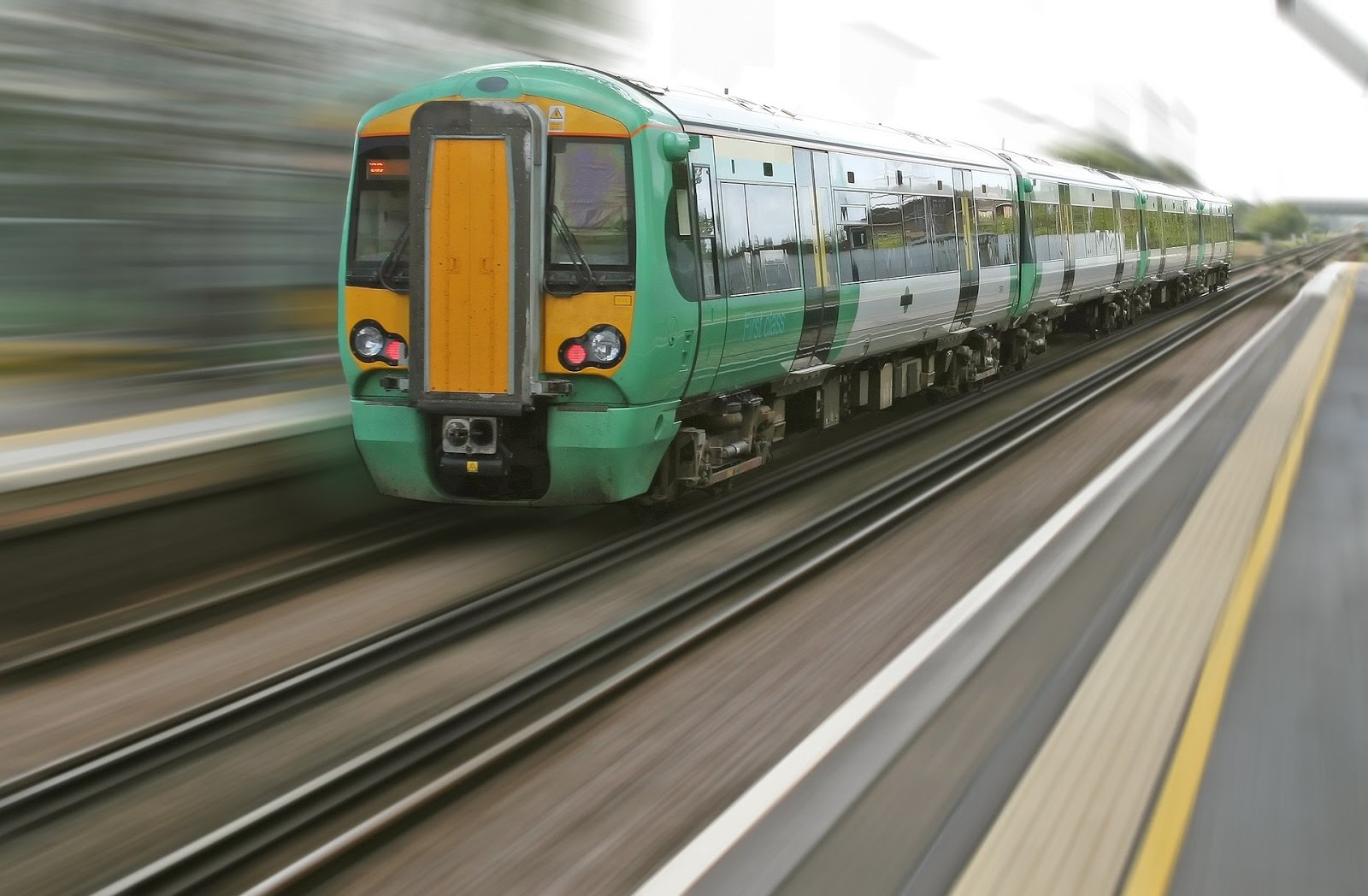
Commuter train - Photo by Shutterbug75/Pixabay
 Wayne County Executive Warren Evans, Oakland County Executive Dave Coulter, and Mayor Mike Duggan of Detroit annoucned a plan to put a new regional mass transit plan before voters Washtenaw Counties are going to try one more time to get voters to approve a regional mass transit plan. I've been listening to plans like this since I was in high school. I'm currently a few months away from my 50th birthday.

I regard this as progress. At least we've recognized that Macomb County isn't going to be a part of it. I'm doubtful that Oakland County will approve it or - if they do - it will likely be so watered-down that it will be of minimal value.

My only hope is that regardless of whether Oakland County approves a watered-down version, Wayne and Washtenaw Counties move forward with a more comprehensive plan for their two counties.

Friday, November 15, 2019

Reconsidering AirBnB in Detroit

AirBnB, Detroit
Home - Stock photo from Pexels
For several months, the City of Detroit has been looking for ways to better regulate short-term rental housing. This includes popular options like Airbnb and Homeaway that have been achieving more and more success in our area.

Critics of short-term rentals point to negative the impact these services have on hotels, housing prices, and the community at large. A study published in the Harvard Business Review, for example, showed that as more Airbnb rentals happened in a given area, the local rent prices would increase proportionately. In some cities, that increase has made a difference in whether or not someone could afford to live there.

These rentals also have a detrimental impact on hotels in the area, as Forbes magazine pointed out. This is important because traditional lodging options pay more taxes and generate more jobs. If hotels are hurt too much, we lose the thousands of jobs and millions in tax revenue that they create.

Supporters, however, point out that optins like Airbnb and Homeaway allow ordinary Detroiters to generate a few hundred dollars a month in extra income from an empty bedroom or two. That extra money can be invaluable to many families.

There is also the fact that when someone stays at a hotel by a large corporation like a Hilton or Marriott, much of the income generated from it leaves our state. In contrast, when money is spent with a small local person then, as a different study by Michigan State University pointed out, that money is more likely to be spent and reinvested locally.

Clearly, the ideal solution is to find some kind of balance that works for everyone. While I don't claim to have all of the answers, I do have a few ideas. For starters, let's talk taxes.

Taxes - Stock photo from Pexels
When someone rents a hotel room in Detroit for a night, they pay a 13% tax rate but when they rent an Airbnb for the same night, they only pay a 6% tax. The difference between the two tax rates is because, while both pay a 6% sales tax to the State of Michigan, short-term rentals do not pay either the 1% tax to Wayne County to support the stadiums nor the 6% tax to support the convention center.

This, I believe, is fundamentally unfair. There's no reason to tax one option for a night's lodging at one rate while taxing a different option at less than half that amount.

Therefore, I propose that we impose an additional 7% tax on short-term rentals in Detroit to even things out. I would further propose that most, if not all, of the revenue go towards improving mass transit. I say this because the stadiums and convention center are both doing just fine as is. Meanwhile, Detroit has what has been ranked as the worst mass transit system in the nation and could desperately use the extra revenue.

We could even add an extra 1 or 2% onto Lyft and Uber rides, while we're at it as well. This would bring them in line with the taxes that we levy on car rentals or taxi cabs. It would also generate even more revenue for mass transit.

The Detroit City Council looked into this issue in 2016; concluding that such a thing is indeed possible. We may have to put the question to a ballot referendum, much like we did with taxes for stadiums and convention center. However, I don't believe that would be a significant challenge.

Neighborhood - Stock photo by Pixabay
The next challenge is in terms of regulating how many Airbnbs can operate in the city. There was an efort by the City Council earlier this year to place a hard limit on the number of these rentals that could exist. This was intended to address the impact of these operation upon the housing market, which I mentioned earlier.

While that move was well-intended, I believe a better option would be to place on limit on the percentage of residential housing stock in a given area that may be used for such things. I believe it would be appropriate for a limit of 1 or 2% of the housing stock in any one square mile for short-term rentals.

In a place like the Warrendale neighborhood, with roughly 4,000 housing units per square mile, this would mean a limit of 40-80 homes that could be used for a short-term rental. As new housing is eventually added in, the limit would increase proportionately.

These, of course, are just a few ideas. I welcome feedback either in the comments below or by email.

This post is a part of the Warrendale Detroit Blog's Friday Focus series. The series endeavors to highlight news, events, and opinions that, in the view of this blog's publisher, don't get as much attention from the news media as they deserve.

Please follow this blog on Facebook for more great content. I'm also on Twitter and Instagram as @fnemecek.
Thursday, November 07, 2019

Community-wide meeting this Wednesday

An avenue - Photo by Peter H./Pixabay
Over the past nine months, residents and community  groups throughout Warrendale have come together and worked with the City of Detroit’s Planning and Development Department. They are going to propose a series of projects for the built environment of this neighborhood. This includes improvements to our streets, our houses, our parks, our businesses, and more.


After all of this work, it’s time for everyone to come out and see what these groups have come up with. The City of Detroit and others are eager to get feedback on everyone who lives or works in Warrendale. This is an essential part of building a community.

To that end, there will be a community-wide meeting this Wednesday, November 13 at the Dick & Sandy Dausch Campus NFL/YET of the Boys & Girls Club of Southeastern Michigan (16500 Tireman Ave.). Doors will open at 5:30 p.m. Presentations will start at 6 p.m.

In addition, childcare will be provided on site for this meeting. If you have young ones that won’t sit through a presentation and you don’t have someone else to watch them, those facts should not be an excuse for not participating. Your voice is an important part of this meeting and that’s why there will be someone there to watch young kids while the adults talk about the future of our neighborhood.

Refreshments will also be provided for those attending this meeting.

Parking is available for this meeting in the lot at the Boys & Girls Club. If that lot fills up, additional parking will be available at the O’Live Church of God in Christ (16601 Tireman Ave.). The church is basically across the street from where this meeting will happen.

There is no cost or commitment for anyone to attend. I hope to see a lot of my neighbors in attendance this coming Wednesday evening.

Monday, March 18, 2019

How to report a problem to the city government

Reporting | Stock photo from Pixabay
It happens - a Detroiter sees a problem that isn't an emergency but still requires the attention of city hall. Maybe the storm drain in front of their house is clogged. Perhaps someone has dumped a pile of trash in a vacant lot. It might be that a fire hydrant on their block needs repairs. Whatever the issue is, you need to get the city involved and navigating through the City of Detroit's every changing but always a bit more complicated than it needs to be bureaucracy can be a daunting task.

The City of Detroit has a simple yet effective way of reporting non-emergency problems. Residents with a smartphone should download the Improve Detroit app from either the iTunes or Google Play Store. This app enables Detroiters to report non-emergency issues to the City. It also enables them to track the City's response to it; even to communicate directly with the employee tasked with handling it and/or his or her supervisor.

Residents who don't have a smartphone can also report non-emergency issues. Instead of using an app to report it, though, they should instead file their report here on the City of Detroit's website.

I posted about the Improve Detroit app and website when it first came out a few years ago. Regardless, after talking with a few of my fellow Warrendale residents, it was clear that a reminder was needed.

The Improve Detroit app and website are your Tip of the Week for the week of March 18,2019.

These tips are brought to you by the Warrendale (Detroit) Blog as part of our semi-regular Tip of the Week feature. Please check back every Monday for more advice on your home, money, and life.

Also, be sure to follow the author, Frank Nemecek, on Twitter and Instagram as @fnemecek for more great information.

Wednesday, August 15, 2018

Mayor Duggan to meet with the neighborhood

Mayor Mike Duggan of Detroit - File Photo

The City of Detroit recently announced that Mayor Mike Duggan will have his annual District 7 Community Meeting on Monday, August 20. This event will start at 7 p.m. at the Straight Gate International Church (10100 Grand River Ave.) and is expected to conclude at 8:30 p.m.

This meeting is an opportunity for residents, business owners, and other interested parties in Warrendale and the surrounding neighborhoods to bring any questions or concerns they might have directly to Mayor Duggan in a public setting. Representatives from the various City departments will also be on hand.

The annual meeting is required by the Charter for the City of Detroit, which mandates that the Mayor hold at least one of these meetings each year in each of the seven City Council districts.

Anyone with any questions or concerns about our local government is invited to attend this meeting.

Monday, June 18, 2018

Open Letter to Keith Crane

The editor-in-chief of Crain's Detroit Business, Keith Crain, published an op-ed recently that was highly critical of dedicated bicycle lanes in Detroit. I wrote a response to him, which my readers will find below.

If Mr. Crain responds to me, I'll be certain to include his rebuttal in a future post. Without further ado, I present my open letter to Keith Crain.

_________________

Dear Keith Crain:

You seem confused by the City of Detroit's decision to install bike lanes in many parts of the Motor City. You even asked whose idea it was and why you didn't hear about it before those municipal bureaucrats began implementing it.

Since you asked, I'll answer.

The idea of adding bike lanes was discussed extensively when Detroiters began debating the future of our city. There were several meetings about this back in 2011 - 12 where residents, business owners, and other stakeholders came together to consider our options as part of the Detroit Works Project and, later, the Detroit Future City project.

Adding bike lanes and offering residents and visitors multiple options to get where they need to go were one of the many principles that were discussed and agreed to.

I'm not surprised that you weren't familiar with this, though. Crain's Detroit Business was the only media outlet in southeastern Michigan that didn't cover those meetings. In order to avoid confusion like this in the future, I suggest that you pick up a subscription to the Detroit Free Press.

Your pal,
Frank

Thursday, July 28, 2016

The future of mass transit in Detroit

Transit station - Photo by Ted C/FreeImages.com
Earlier this afternoon, representatives from Macomb and Oakland Counties blocked a key vote that would have allowed voters in southeastern Michigan to decide on a millage to improve mass transit in the region. This is the 27th time that funding for a regional transit authority has been blocked due to parochial interests.

There are many across Michigan who a disappointed by this news. Many are even confused since the bulk of new transit options that would have been created under this plan would have been in Macomb and Oakland Counties.

While I join the echo of disappointed Detroiters, I must admit that I am not surprised by this development. Many in the northern suburbs, particularly the more distant suburbs, have long been hostile to public funding for mass transit.

The question that I believe all Detroiters must ask now is: where do we go from here?

There are no doubt those who will simply give up. Others will attempt to appease Macomb and Oakland Counties with an even greater share of transit benefits, most likely at the expense of those who live Downriver and in Western Wayne County.

I, however, advocate for a different option. The City of Detroit as well as Wayne and Washtenaw Counties are the three entities that were eager to move forward with improving mass transit in southeastern Michigan. There are also a few communities in our northern suburbs, such as Ferndale, who are also eager to see a better transit system in place.

Bus stop - Photo by Andre Montejorge
Rather than continue down the same path that we've been on for decades - of constantly trying to convince our holdout neighbors that this is in everyone's best interests and constantly being rebuffed - I believe it is everyone's best interest for those communities who see the value in transit to move forward on our own rather continuing to spend more time and resources convincing the holdouts that they're wrong.

By moving forward without these skeptics, we could improve upon the QLine and take it to 9 Mile. Build upon the walkable communities in Ann Arbor, Dearborn, and Ypsilanti. Provide coordinated support to the DDOT and AATA systems in Detroit and Ann Arbor.

Based on what we've seen in other parts of the country, people and business will likely flock to those parts of our region where transit is improved. (For a detailed accounting of this trend, please see Transit-Oriented Development in the United States: Experiences, Challenges, and Prospects by Robert Cervero available for free here.)

The holdouts will likely circle behind once they see the progress and realize that they cannot extract even more from the people of Wayne County. If they don't, it's more their loss than anyone else's.

The bottom line is that I believe it is time to stop allowing a relatively small group of individuals to hold the transportation needs of more than 2.1 million Michigan residents hostage. It's time for us to move forward, with or without the holdouts.

Thursday, November 20, 2014

Detroit examines creating its own auto insurance for residents

Auto insurance has long been the bane of many Detroiters. The rates that city residents pay is dramatically higher than those paid by our suburban neighbors and this has been one of the many impediments to bother attracting new residents as well as retaining current ones. All of this may change, though, thanks to a plan approved by the City Council today.

The City of Detroit has hired Pinnacle Actuarial Services of Bloomington, Illinois to examine the feasibility of creating a city-owned insurance program. This program, tentatively called D Insurance, would provide city residents with auto insurance rate that much cheaper than what is currently available.

This idea has been proposed several times over the years, most notably by former City Council Member Kwame Kenyatta. However, prior to today, no action has ever been taken on making it a reality.

I believe this is an important first step in either creating such a program or in scaring the crap out insurance companies so that they make changes to their rates. I commend Mayor Mike Duggan as well as Council Member Gabe Leland who represents the Warrendale and its surrounding neighborhoods on the Detroit City Council and each of the other council members for taking this important first step.


Thursday, December 26, 2013

Happy 100th birthday to the Michigan Central Station

Michigan Central Station, circa 2009
Photo by Frank Nemecek
Michigan Central Station, formerly the main train station in Detroit and one of the most famous abandoned buildings in the world, turns 100 years old today. The first train pulled out of the station at 5:20 p.m. on December 26, 1913.

Across the internet, and in at least some the newspapers, one will find much written about the Michigan Central Station on this historic anniversary. My friend Dan Austin has a column about it in this morning's edition of the Detroit Free Press here. Tom Zoellner also has piece about what the place would be like if it were a part of a high-speed rail network here.

I would simply like to add my own birthday wish for the Michigan Central Station. I hope that the new year brings a new owner for the station; one who will give it the love that this historic landmark richly deserves.

Monday, June 24, 2013

Bumping Into Paul Tait

Penthouse Club Detroit - Secret Headquarters of SEMCOG
Photo by Frank Nemecek
When I first walked into the Penthouse Club, my attention immediately went to the mostly naked gyrating bodies on stage. There is something about a barely clothed woman spinning on a pole that will grab anyone’s attention. After a moment, though, I allowed by eyes to scan the rest of this establishment.

There was a group of middle aged white men at a table at the far end of the club that I thought I recognized. I took a few steps towards them. For better or worse, one of them recognized me before I recognized him.

“You’re that blogger,” he called out. “You’re the reason ‘#AbolishSEMCOG’ was trending on Twitter last Friday.”

“And you must be Paul Tait, executive director of Southeast Michigan Council of Governments,” I replied as I continued to walk towards them.

“And these are the rest of the people that you would put out of a job,” he added as he gestured to his staff seated around the table.

“Am I interrupting anything, gentlemen?” I inquired.

“Just our usual staff meeting,” one of the others replied.

“Well, as long as I’ve got you here,” I wondered aloud, “do you mind if I ask for you a few questions as an interview for my blog?”

Friday, May 10, 2013

Restricting Cars in Rouge Park

Road in Rouge Park - Photo by Frank Nemecek

The master plan presentations for the future of Rouge Park were earlier this week. One of the many ideas that are currently on the table to is to limit the access of automobiles into the largest park in Detroit. There is even talk of banning them from the area outright.

I could dwell on the irony of a place like the Motor City banning cars from the park. However, there are lots of different reasons why some residents and other stakeholders in Rouge Park would like to see less automobile traffic in the area.

The presentations on Wednesdays spent a fair amount of time discussing this idea. There was even more documentation in the reports themselves. Here is a quick summary of the rationale behind limiting automotive access to Rouge Park.
  • We've seen lots of speeding through that area. The posted speed limit in the area is 25 m.p.h., but drivers routinely travel through Rouge Park at 40 m.p.h. or faster. The Detroit Police Department has been rather ineffective at enforcing speed limits in the area.
  • The infamous cars "parked" along the side of road throughout Rouge Park. This includes people who park their cars along the side of the road while engaging in a variety of illicit activity, none of which is conducive to kind of parkland that residents want in their neighborhood. Again, the Detroit Police Department has been rather ineffective in 
  • Plus, it's hard to do much illegal dumping in Rouge Park area if you can't take your car through it (at least not the large-scale dumping of construction debris that we see so much of there).
The solution recently proposed is to take all of the roads in the Rouge Park to only one lane in each direction and to limit the areas where one can legally park. If/when they identify enough funding to operate a shuttle service in the area, they might also pursue an outright ban on cars in the park.

If that happens, there will be a few park and ride lots near the park entrances and a shuttle will take people where they want to go. Walking, bicycling, and so on would not be effected by this proposal at all.

Since the picnic areas are mostly near the various park entrances, which is where the park and ride lots would also be, this wouldn't be much of a change for people carrying coolers and such. They would simply go from carrying coolers from the side of the road to the picnic area to carrying from the lot to the picnic area; a difference of a few yards.

The park users who would be effected by this the most are those activities that more along the interior of the park. This includes things like the archery range, the mountain bike trail, tallgrass prairie visitors, and so on.

Limiting the number of lanes and instituting certain "no parking" areas seems like a good idea in my opinion. It'll be interesting to see if the outright ban on cars ever materializes.

Wednesday, November 28, 2012

5 Books Every Candidate for Mayor or City Council in Detroit Should Read

Stock Photo by Peter Mazurek
The race for Detroit's mayoral and city council elections are still almost a year away. However, it is already starting to heat up as more than a few people who have already declared their intention to run.

Since politics can be an ugly but incredibly important affair, I thought I would try to start things off on a positive note. With a little help from my friends on Facebook, I created my list of 5 books that every candidate for mayor or city council ought to read.

For anyone who hasn't read each of them of books, I strongly encourage them to do so. I have even included links to listing for each on Amazon.com to make it easier for people to find a copy.

Without further ado, I present my picks for 5 books that every candidate for mayor or city council in Detroit ought to read. My list includes, in no particular order:
For those wishing a little extra credit, I also recommend that those wishing to be the best possible leaders also read Comeback Cities: A Blueprint For Urban Neighborhood Revival by Paul Grogan, The Geography of Nowhere by James Kunstler, and The Great Good Place by Ray Oldenburg. Last, but certainly not least, I also recommend reading Leadership by Rudy Guiliani, if only for his chapter "Underpromise and Overdeliver."

______

Disclosure of Material Connection: Some of the links in the post above are “affiliate links.” This means if you click on the link and purchase the item, I will receive an affiliate commission. Regardless, I only recommend products or services I believe will add value to my readers. I am disclosing this in accordance with the Federal Trade Commission’s 16 CFR, Part 255: “Guides Concerning the Use of Endorsements and Testimonials in Advertising.”

Monday, March 19, 2012

7 Things That Should Be Changed in the Proposed Consent Agreement

Governor Rick Snyder unveiled his proposed consent agreement last Tuesday. Since then, there has been almost unending amount of howling from certain quarters within our community. Those complaints, by the way, came from many of those who were also opposed to the various reforms that we written into the new City Charter that was overwhelmingly enacted last year. Regardless of how much those individuals might protest, the fact of the matter is that consent agreement is likely coming very soon and it's probably the best thing for Detroiters.

With that in mind, I would like to offer seven specific suggestions that I believe Mayor Dave Bing as well as everyone on the City Council and Lansing should carefully consider.

#1. Guarantee Public Involvement in the Process
No matter what someone somewhere might plug into a spreadsheet, the fact remains is that it is our tax dollars that are being spent here and our futures that are at stake. While Governor Snyder was busy building his fortune, thousands of middle class families were fighting to make Detroit a place worth living in. Their efforts, quite frankly, are the main reason why this town is still standing.

If those families are going to be asked to continue the fight, and if new ones are going to asked to join in, then they must be guaranteed that they will have an opportunity to have their objections heard and their suggestions duly considered. There will unquestionably be a loud outpouring of people that my friend Jeff Wattrick of MLive.com refers to as "grape throwers" in his columns. It could be tempting to shut them out out of the process, but shutting them out also means shutting out the ordinary middle class families who have kept Detroit afloat for this long, which only gives those families yet another reason to leave.

Wednesday, October 19, 2011

Mayor Bing to Discuss Bus Crisis at 5 p.m.

Mayor Bing to Talk About Bus Service
Mayor Dave Bing will hold a press conference regarding the on-going problems with DDOT bus service at 5 p.m. today. The Mayor has faced harsh criticism from the City Council and others over the fact that many city buses are routinely late, sometimes up to three hours behind schedule.

Needless to say, I will likely have much to say about this issue once his press conference is over.

Monday, November 29, 2010

Density Doesn't Solve Everything

Jane Jacobs
I'm a huge fan of population density. I have lived in and visited other cities with a lot more density than Detroit. I've seen its benefits on a firsthand basis. I've also been known to thrust Jane Jacobs's books in the faces of random people and urge them to read her works.

When Mayor Dave Bing started talking about increasing Detroit's population density, I was pleasantly surprised. There was a moment when I thought that we had an administration that got it; one that was able to move Detroit forward. Unfortunately, a year later, all we have is talk.

The worst part of this is that Detroiters still pay a tax burden that is roughly double national averages and we still suffer through public services that are almost non-existent. There seems to be a general acknowledgement that we need to change these things. However, we as a community have not made any real progress towards improving these matters over the past year.

I have, however, heard several people postulate that once a plan to improve Detroit's density is finalized and implemented things will start to improve. I have even heard people argue, in complete seriousness, that improving Detroit's population density is a prerequisite for improving basic city services.

This argument is, in my opinion, downright terrifying. The fact that I keep hearing this means that a sound urban principle, such as population density, has become nothing more than a corporate buzzword that is thrown around in lieu of actual ideas or actions.

For everyone who believes that Detroit cannot improve its core city services or reduce its tax burden until it improve its population density, I ask you to consider a few things:

Tuesday, July 13, 2010

Suspect Arrested in Bus Stop Shooting

Fox 2 News is reporting that the Detroit Police Department has arrested one of the two men who shot seven teenagers while they were waiting for a bus at the corner of W. Warren Ave. and the Southfield Fwy last summer. Demetrius Hinton, age 20, turned himself in at the 6th Precinct Station (11450 Warwick St.).

Police believe he is one of two of the masked gunmen captured in the surveillance video who opened fire at the bus stop at W. Warren Ave. and wounded seven students who just got out of summer classes. That happened in July of 2009.

Police say one month later, Mr. Hinton is believed to have committed another crime, shooting and killing Donald Bohlinger and wounding another man during a robbery that went bad.

In October, it is reported that federal investigators joined in the hunt for Mr. Hinton. Investigators believed he fled to Georgia and even applied to college in Atlanta.

Over the last few months, however, investigators learned Mr. Hinton was back in the Detroit area. We're told they were closing in on him, putting pressure on him and his family, so much so that he had no choice but to turn himself in. Monday evening, he walked into the police station and surrendered.

Sources told Fox 2 that the police are still searching for the second masked gunman. They believe they are very close to arresting him, too.

Thursday, October 01, 2009

Transit Candidates Forum

The TRU Detroit City Council Candidate's Forum is this evening, Thursday, October 1, at the Considine Recreation Center (8904 Woodward Ave.).  This forum will start at 6:30 p.m. and will focus on mass transit.  It is sponsored by Transit Riders United, which is a leading advocate for mass transit in Detroit.

For those not familiar with the Considine Recreation Center, it is on Woodward Ave.; approximately 3/4 of a mile north of W. Grand Blvd.  If anyone is interested in taking bus from the Warrendale neighborhood to this forum, which is oddly appropriate for a forum on mass transit, it will take approximately one hour to complete your trip.  I recommend the Crosstown bus to Woodward and then transferring to the Woodward bus to go north.

Monday, July 20, 2009

Roy McCalister for City Council

Roy McCalister, Jr. brings an astonishing level of experience to his campaign for the Detroit City Council. I am proud to endorse him.

As a police officer, Roy McCalister rose through the ranks to become Commanding Officer of the Homicide Section for the Detroit Police Department.

As a soldier, Roy McCalister served on active duty and reserves in the U.S. Army. He was a part of the Army's Criminal Investigative Division and was responsible for interrogating some of Saddam Hussein's top aides during Operation Iraqi Freedom and helped to train the Iraqi police force.

As a candidate, Roy McCalister has made edcuation, mass transit and public safety key issues in his campaign. He also has a strong focus on historic preservation; understanding that it can be a key ingredient to creating jobs and improving tax revenue.

I am pleased to join AFSCME (Local 3082), the Detroit Police Officers Association, Hood Research and the union employees of Henry Ford Health Systems in endorsing Roy McCalister for the Detroit City Council. More information about him, is available on his campaign web site.

Charles Pugh for Detroit City Council

I met Charles Pugh for the first time on May 18, 2005, which was the day that the City of Detroit decided to demolish the historic Madison-Lenox Hotel and replace it with a parking lot. I was the local press contact for the historic preservation groups, which meant that it was my job to remind everyone that there were developers ready to redevelop the hotel, creating jobs and tax revenue in the process. (There is more from that fateful day over on my personal blog.)

I also got to remind everyone that the City of Detroit had recently falsified the inspection reports for that hotel. They argued that the building was found to be in eminent danger of collapse when, in truth, their own records showed that the building hadn't even been inspected.

Charles Pugh was one of the reporters who got the importance of the story. He seemed to understand the value of not only preserving a piece of Detroit's cultural identity, but the importance of jobs and tax revenue that a reborn hotel can create.

Of course, it didn't stop there. When Detroit Synergy launched its Shop Detroit project to encourage people to discover some of the retail options that exist within Detroit, Charles Pugh went out of his way every year to make sure that the project got the media attention that it deserved.


Charles Pugh is also one of a handful of individuals who never let his celebrity status get to his head. Over the past few years, I have seen him on several occasions on Riverfront downtown or at one restaurant or another. He is one of the most approachable people around; always willing to listen to anyone who wants to talk - regardless of whether they're happy or upset with him.

He takes that experience as a reporter and a lifelong Detroit resident into the campaign with him. He has made crime and police response time key issues in his campaign as well as taxes, mass transit and economic development. You can read more about his platform here.

It's for all of these reasons that I join the Detroit Free Press, the Detroit Regional Chamber, the Metro Detroit AFL-CIO and others in endorsing Charles Pugh for Detroit City Council.

Monday, November 24, 2008

Mayoral Forum

The Warrendale Community Organization will sponsor a forum for mayoral candidates on Saturday, January 17 from noon until 3 p.m. in the gymnasium at St. Thomas Aquinas Church. The WCO will invite 5 candidates to address questions such as public safety & crime, economic development in the neighborhoods, mass transit and the City's budget problems.

Members of the WCO will vote at their holiday party on which 5 of the mayoral candidates should be invited. (See below for details on the WCO holiday party.)

More information about this event will be forthcoming on this blog.